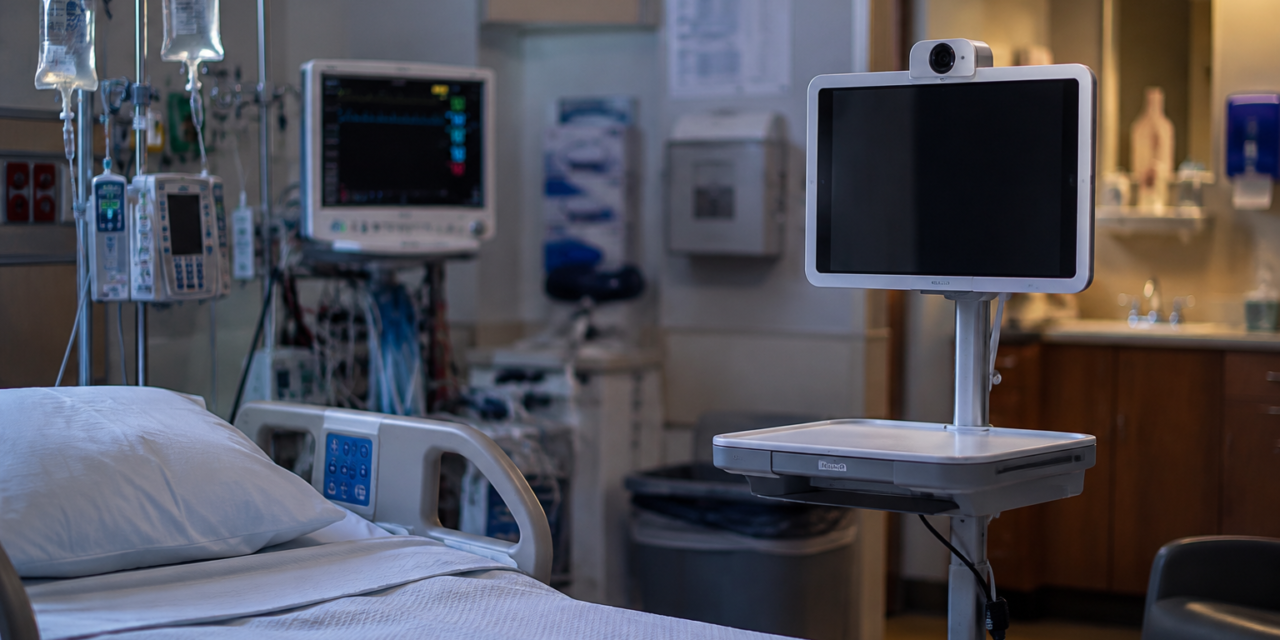
Hospitals across the United States are quietly revisiting an important question.
Can Video Remote Interpreting (VRI) become the primary method of communication for Deaf patients, or should healthcare systems continue investing in qualified, in-person American Sign Language (ASL) interpreters?
The discussion has gained new attention following recent federal policy changes involving Title VI of the Civil Rights Act. The U.S. Department of Homeland Security rescinded its Title VI Limited English Proficiency guidance, while the U.S. Department of Health and Human Services finalized a rule eliminating disparate impact liability under Title VI. Some healthcare organizations are now reassessing language access programs as they evaluate staffing models, compliance obligations, and operating costs.
At first glance, the discussion appears to be about regulations.
A closer examination reveals something much larger.
It is about patient safety.
It is about effective communication.
It is about whether technology designed to expand access is gradually becoming a substitute for the very access it was created to support.
This investigation draws on seven years of Deaf Vee reporting, federal enforcement actions, peer-reviewed medical research, disability law, and guidance from national organizations to examine how hospitals arrived at this moment and what is at stake moving forward.
What Is Video Remote Interpreting?
Video Remote Interpreting (VRI) is a service that connects a Deaf patient and a qualified sign language interpreter through live video when both the patient and healthcare providers are in the same physical location.
Unlike Video Relay Service (VRS), which is designed for telephone communication, VRI is intended to facilitate face-to-face conversations when an interpreter cannot be physically present.
When used appropriately, VRI can improve access by reducing wait times, expanding interpreter availability in rural communities, and providing immediate communication during urgent situations.
The critical question has never been whether VRI is useful.
The question is whether it provides effective communication for the individual patient in the circumstances they face.
The Debate Started Before COVID-19
The common assumption is that VRI became controversial because of the COVID-19 pandemic.
The historical record tells a different story.
In 2019, Deaf Vee investigated questions surrounding the legal use of VRI and whether organizations fully understood their obligations when relying on remote interpreting.
During February 2020, before COVID-19 dramatically altered healthcare delivery, Deaf Vee published a series of investigations examining the growing use of VRI in healthcare.
Those investigations questioned whether healthcare systems were becoming increasingly dependent on video interpreting, explored concerns about patient safety, and reported on Alberta Health Services’ expansion of VRI within emergency departments.
Those stories demonstrate that the conversation surrounding VRI predates the pandemic.
COVID-19 accelerated the discussion.
It did not create it.
COVID-19 Changed Delivery, Not the Purpose of VRI
When COVID-19 reached North America, hospitals faced extraordinary operational challenges.
Visitor restrictions, staffing shortages, infection control measures, and travel limitations dramatically affected interpreter availability.
Federal regulators responded with temporary emergency waivers that expanded remote interpreting.
Those decisions preserved communication access during a national public health emergency.
At the time, Deaf Vee reported that the pandemic had exposed significant gaps in disaster preparedness, contingency planning, and telecommunications infrastructure.
Emergency measures accomplished exactly what they were designed to do.
They kept communication available during a crisis.
What remains less clear is how many emergency practices gradually evolved into permanent operational models after the crisis subsided.
That question deserves careful examination.
What Federal Policy Actually Says
Much of the current discussion has focused on Title VI.
That attention is understandable.
However, Title VI represents only one part of the broader legal landscape governing communication access in healthcare.
Joint Commission accreditation standards continue to require effective communication throughout the continuum of care.
CMS Conditions of Participation continue to require hospitals to meet patients’ communication needs.
Section 1557 of the Affordable Care Act continues to shape healthcare nondiscrimination requirements, although portions of the rule remain subject to ongoing litigation.
Perhaps most importantly, disability law has consistently focused on the effectiveness of communication rather than the specific technology used.
That distinction often gets overlooked.
The law does not require hospitals to choose video.
It does not require hospitals to choose in-person interpreters.
It requires healthcare providers to ensure effective communication.
What Federal Enforcement History Reveals
One of the strongest indicators of how federal agencies interpret effective communication comes from enforcement actions.
A joint Voluntary Resolution Agreement involving the U.S. Department of Justice, the U.S. Department of Health and Human Services, and William W. Backus Hospital specifically identified situations in which Video Remote Interpreting may not provide effective communication.
Those situations include patients who are lying down, experiencing pain, have limited mobility, have limited vision, have cognitive limitations, when multiple people are speaking simultaneously, when conversations are complex, or when technical limitations interfere with communication.
In those circumstances, the agreement requires reasonable efforts to provide an on-site qualified interpreter or another auxiliary aid capable of ensuring effective communication.
That guidance shifts the discussion from technology to outcomes.
The question becomes whether communication is effective, not whether video equipment is available.
What the National Association of the Deaf Says
The National Association of the Deaf recognizes that Video Remote Interpreting can significantly improve communication access.
Its guidance also recognizes important limitations.
The NAD explains that healthcare providers should evaluate whether VRI is actually effective for the individual patient.
If it is not, another auxiliary aid or service, including an in-person interpreter, may be necessary.
This position does not reject technology.
It supports individualized communication decisions.
What Medical Research Shows
The scientific literature paints a nuanced picture.
Research consistently shows that VRI can improve access when qualified in-person interpreters are unavailable.
Studies also demonstrate that patient satisfaction depends heavily on interpreter quality, reliable technology, camera positioning, clinical environment, and the complexity of the medical encounter.
Researchers have found that technical failures, interrupted communication, and poor visual access reduce patient satisfaction and interfere with discussing health information.
More recent studies similarly conclude that while VRI can improve access, it should not be automatically treated as interchangeable with in-person interpreting across all healthcare settings.
Why American Sign Language Is Different
Hospitals frequently serve patients speaking dozens or even hundreds of languages.
Maintaining in-person interpreters for every spoken language would be impractical.
American Sign Language presents a different communication model.
ASL is a complete visual language with its own grammar, syntax, and linguistic structure.
Meaning is conveyed through facial expressions, body movement, eye gaze, spatial relationships, and continuous visual attention.
Communication occurs in three-dimensional space.
That distinction becomes particularly important in emergency departments, intensive care units, behavioral health settings, labor and delivery, trauma care, and end-of-life conversations.
Those environments introduce challenges that extend beyond simply placing an interpreter on a monitor.
The communication environment itself becomes part of the clinical decision.
Following the Money
Cost is an unavoidable part of the discussion.
Hospital leaders must balance staffing shortages, reimbursement pressures, and increasing operational expenses.
Those realities deserve acknowledgment.
At the same time, communication failures also carry measurable costs.
Medication errors.
Incomplete informed consent.
Delayed treatment.
Repeat hospitalizations.
Patient dissatisfaction.
Potential litigation.
Poor communication affects both quality and cost.
The question is not whether VRI saves money.
The question is whether cost-saving decisions preserve effective communication.
The Investigation’s Central Question
Looking back across seven years of reporting, one pattern emerges repeatedly.
Before COVID-19, questions centered on legal compliance and appropriate use.
During the pandemic, emergency measures expanded remote interpreting to preserve communication.
After the pandemic, hospitals increasingly incorporated those technologies into routine operations.
Today, changing federal enforcement priorities have once again placed language access under review.
The technology has changed.
The regulations have evolved.
Healthcare economics have become increasingly challenging.
Yet one question has remained remarkably consistent.
When does a technology designed to expand access gradually become a replacement for the human communication some patients still need?
That question deserves careful examination because it affects far more than compliance.
It affects patient safety.
Sources and Further Reading
Deaf Vee Reporting
- Are VRI Interpreters Breaking the Law? (2019)
- A New Deadly Epidemic: VRI Services (2020)
- Are VRI Services Really Deadly? (2020)
- VRI Takeover of Alberta’s ER Departments (2020)
- FCC Suspends Rules Behind At-Home Program (2020)
- Convo Botches Premature Rollback for Remote Interpreters (2020)
- The TRS Waiver Set to Expire August 31, 2021 (2021)
Federal Resources
- U.S. Department of Justice and U.S. Department of Health and Human Services Voluntary Resolution Agreement with William W. Backus Hospital.
- ADA: Effective Communication
- HHS Restoring Title IV’s Promise of Equal Protection
Professional Guidance
- National Association of the Deaf: Video Remote Interpreting Guidance.
- Joint Commission standards on effective communication.
Peer-Reviewed Research
Studies published in JAMA Network Open examining healthcare communication and Video Remote Interpreting.
Studies published in JMIR Rehabilitation and Assistive Technologies


Recent Comments