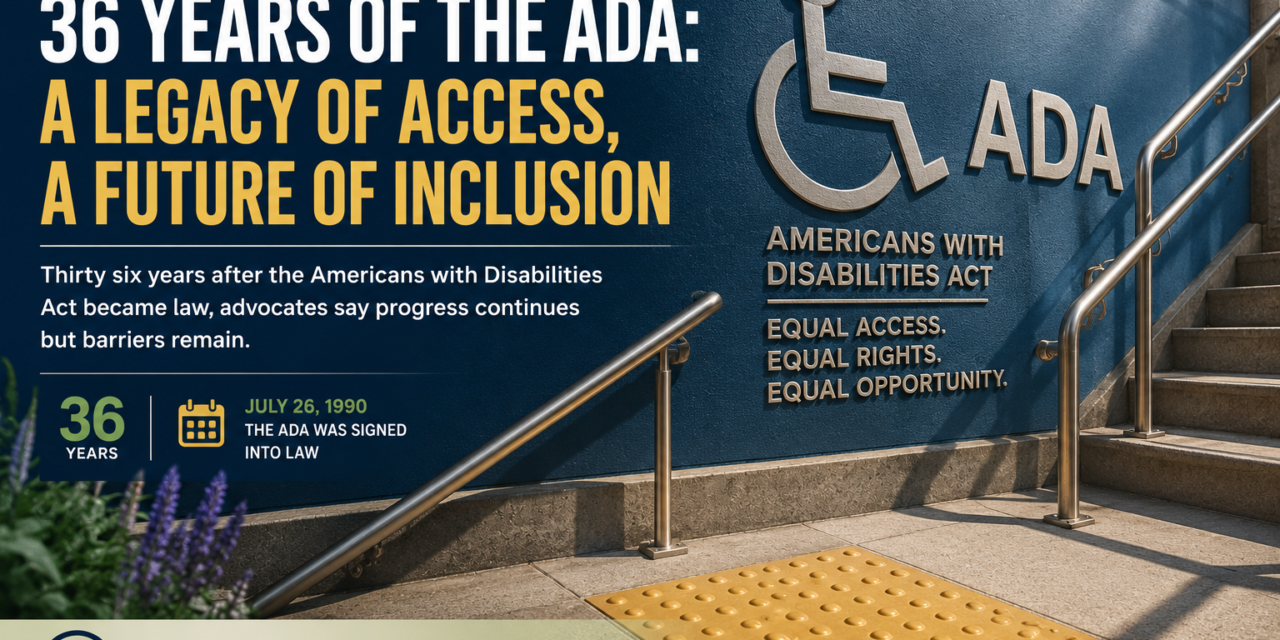
July 26 marks the 36th anniversary of the Americans with Disabilities Act (ADA), the landmark civil rights law signed by President George H. W. Bush in 1990 that prohibits discrimination against people with disabilities in employment, public services, transportation, telecommunications, and places of public accommodation.
More than three decades after its passage, the ADA remains one of the most influential disability rights laws in American history. It established legal protections that have reshaped schools, workplaces, government agencies, businesses, healthcare systems, and public spaces by requiring equal access for qualified individuals with disabilities.
For many Americans, the ADA is most visible through physical improvements such as ramps, curb cuts, accessible parking, elevators, and automatic doors. However, disability advocates note that the law’s impact extends far beyond the built environment.
For Deaf and Hard of Hearing individuals, the ADA has expanded access to qualified sign language interpreters, captioning, telecommunications services, and effective communication in many public settings. For DeafBlind individuals and people with other disabilities, the law has supported accommodations intended to promote equal participation in education, employment, healthcare, and community life.
Although significant progress has been made since 1990, accessibility organizations continue to report ongoing barriers.
Interpreter shortages remain a challenge in many parts of the country, particularly in healthcare, legal proceedings, and educational settings. Digital accessibility has also become an increasing focus as more services move online. Advocates continue to encourage businesses, government agencies, and technology developers to ensure websites, mobile applications, virtual platforms, and artificial intelligence tools are accessible from the beginning rather than modified after barriers are identified.
According to the Centers for Disease Control and Prevention, approximately one in four adults in the United States lives with a disability. As the population ages and technology becomes more integrated into everyday life, accessibility continues to be an important issue affecting millions of Americans.
The ADA has also influenced later accessibility standards, including updates to digital accessibility guidance and broader conversations about inclusive design. Many organizations now recognize that accessibility benefits not only people with disabilities but also older adults, families, veterans, and others who may experience temporary or permanent barriers.
Across the country, disability organizations are commemorating the ADA’s anniversary by recognizing the achievements of the disability rights movement while highlighting the work that remains. Events, educational campaigns, and community discussions are taking place throughout July to celebrate the law’s legacy and encourage continued advocacy.
For the Deaf, DeafBlind, Hard of Hearing, and disabled communities, the anniversary serves as both a celebration and a reminder that equal access requires ongoing attention. While the ADA established important legal protections, advocates emphasize that meaningful accessibility depends on consistent implementation, qualified services, and a continued commitment to removing barriers before they prevent participation.
Thirty six years after the ADA became law, its influence continues to be seen in communities across the nation. As accessibility needs evolve alongside society and technology, many advocates believe the next chapter of the ADA will focus not only on meeting legal requirements but also on creating environments where inclusion is built into every stage of planning and decision making.


Recent Comments